Rachel Blevins: Career, Background, and Public Profile
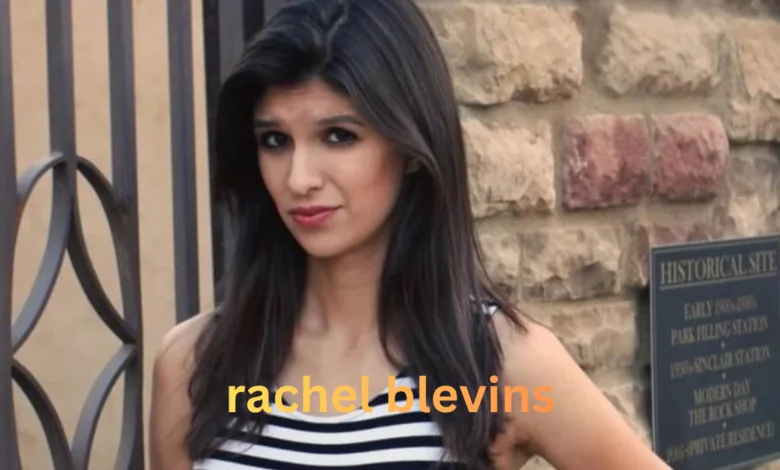
Rachel Blevins usually means you are trying to understand more than a simple name. You may have seen her connected to independent journalism, foreign policy commentary, RT America, Substack, or debates about media bias. The challenge is that many online summaries either repeat the same basic facts or jump straight into opinion without explaining the full context.
Rachel Blevins is an American journalist and commentator whose public profile is closely tied to independent media, anti-establishment reporting, U.S. foreign policy coverage, and her previous work at RT America. Because that background can be politically sensitive, a useful profile needs to separate confirmed facts from interpretation.
This article explains who Rachel Blevins is, what she is known for, how her career developed, why her RT America connection matters, and how readers can evaluate her work fairly. The goal is not to promote or attack her, but to give a clear, balanced, human-written overview for anyone trying to understand her public role.
Who Is Rachel Blevins?
Rachel Blevins is a journalist and independent media commentator known for covering U.S. politics, foreign policy, government power, censorship, media narratives, and international conflicts. Her public-facing work often presents itself as skeptical of mainstream media framing and critical of establishment institutions.
She is not usually described as a traditional cable-news personality in the broad household-name sense. Instead, her audience is more concentrated among people who follow alternative media, geopolitical commentary, and independent journalism platforms.
A simple way to understand her public identity is this: Rachel Blevins built her career around questioning official narratives, especially on war, foreign policy, and state power. That approach has attracted an audience that values anti-establishment commentary, while also bringing criticism from people who see some of her media associations as controversial.
Rachel Blevins’ Education and Early Direction
Rachel Blevins studied journalism at Texas Tech University. That background matters because it shows she entered media through formal journalism training, not only through social media commentary or political activism.
Her early career path also reflects a broader shift in modern journalism. In the past, many young journalists moved from local newspapers or television stations into national media. Today, some build careers through a mix of online publishing, independent platforms, podcasts, freelance reporting, and alternative outlets.
Blevins’ career fits that newer pattern. She moved from journalism education into public-facing commentary and reporting, eventually becoming known in a media space where the line between journalist, analyst, host, and independent creator can overlap.
That overlap is one reason people search her name. They want to know whether she is a reporter, commentator, presenter, activist, or media personality. The most accurate answer is that her work includes elements of journalism and commentary, with a strong emphasis on independent political analysis.
What Rachel Blevins Is Known For
Rachel Blevins is best known for commentary on topics such as:
- U.S. foreign policy
- War and military intervention
- Government corruption
- Media bias
- Censorship and platform control
- International affairs
- Political hypocrisy
- Establishment narratives
- Civil liberties
- Economic and geopolitical pressure campaigns
Her style appeals to readers and viewers who feel that mainstream outlets often ignore certain angles, especially when it comes to war, sanctions, surveillance, or the role of powerful governments.
However, her work is also viewed through the lens of where she has appeared and worked. Her time at RT America remains one of the most discussed parts of her career, and it continues to shape how critics and supporters interpret her reporting.
The RT America Connection
A major part of Rachel Blevins’ public profile comes from her work at RT America. RT America was the U.S. branch of the Russian state-funded RT network. It ceased production in 2022 after Russia’s invasion of Ukraine and increasing pressure on Russian state media in the United States.
This background is important because it affects how many people evaluate her journalism. Supporters may argue that RT America provided space for stories and voices ignored by mainstream media. Critics argue that the network served Russian state interests and often framed global events in ways favorable to Moscow.
A fair profile should not ignore either side. Blevins worked at RT America, and that connection is factual. It is also factual that RT America was widely criticized by U.S. officials, media analysts, and other journalists. At the same time, individual journalists who worked there may describe their motivations as independent, anti-war, or critical of U.S. foreign policy rather than pro-Russian.
The key is to understand the difference between a person’s stated journalistic mission and the institutional reputation of the platform that employed them.
Why Her Career Became More Controversial After 2022
The year 2022 changed the public conversation around RT America. When Russia invaded Ukraine, Russian state-backed media faced bans, removals, distribution losses, and public backlash in Western countries. RT America shut down production, and many people associated with the network became part of a larger debate about propaganda, free speech, censorship, and media influence.
Rachel Blevins became one of the names discussed in that context because she had been visible on the network and continued producing commentary after its closure.
This is a major insight that many short profiles miss: the controversy around Blevins is not only about her as an individual. It is also about a bigger argument over how audiences should judge journalists who worked for state-funded or politically aligned media outlets.
That question does not have a simple answer. Readers need to look at both the content and the platform history.
Rachel Blevins as an Independent Journalist
After RT America, Rachel Blevins continued building her presence as an independent journalist and commentator. Her independent work is associated with platforms where creators publish directly to their audiences, rather than relying only on traditional media institutions.
This kind of model changes the relationship between journalist and audience. Instead of a newsroom deciding which topics get covered, independent creators often choose stories based on their own editorial priorities and audience interest.
There are advantages:
- More editorial freedom
- Faster response to current events
- Direct connection with readers
- Coverage of overlooked topics
- Less dependence on corporate media structures
There are also risks:
- Less institutional fact-checking
- Stronger audience pressure
- More personal brand influence
- Potential for selective framing
- Fewer editorial safeguards
Understanding Rachel Blevins requires understanding this independent media environment. Her work is not just a biography story; it is also part of the broader transformation of journalism.
Her Reporting Themes and Media Style
Rachel Blevins’ public style is often direct, skeptical, and critical of official explanations. She tends to focus on power structures, especially governments, intelligence agencies, military alliances, and major media institutions.
Her work often asks questions like:
- Who benefits from this policy?
- What is the mainstream media leaving out?
- Is the public being prepared to support a war?
- Are sanctions harming ordinary people?
- Is censorship being used in the name of safety?
- Are political leaders applying double standards?
This framing can be useful when it challenges lazy narratives. But it also requires careful evidence. Skepticism is strongest when it is supported by documents, quotes, timelines, and transparent sourcing.
For readers, the best approach is not to accept or dismiss her work automatically. It is better to evaluate each claim on its own.
How to Evaluate Rachel Blevins’ Work Fairly
If you are reading or watching Rachel Blevins for the first time, use a simple checklist.
1. Separate facts from commentary
A factual claim can be checked. Commentary is interpretation. Good analysis makes clear which is which.
2. Look for original sources
Strong reporting should point to speeches, documents, official statements, records, or direct interviews. If a claim depends only on opinion, treat it as opinion.
3. Compare across outlets
Do not rely on one source for complicated geopolitical topics. Compare mainstream, independent, foreign, and primary sources where possible.
4. Watch for selective framing
A report can include true facts while leaving out important context. Ask what is missing.
5. Consider platform incentives
Independent media, corporate media, and state-funded media all have incentives. None should be treated as automatically neutral.
This is a useful habit not just for Rachel Blevins, but for any journalist covering politics or international conflict.
Why People Search for Rachel Blevins
Search intent around Rachel Blevins usually falls into several categories.
Some people want a basic biography. They want to know her background, education, career path, and current work.
Others are trying to understand her connection to RT America. They may have seen criticism of the network and want to know whether she worked there.
Some searchers are looking for her independent content. They may want to find her current commentary, interviews, or political analysis.
Others are checking credibility. They want to know whether she should be considered a journalist, commentator, propagandist, independent reporter, or media personality.
A helpful article should answer all of these needs without pretending that public opinion about her is uniform. Rachel Blevins is a polarizing media figure precisely because her subject matter is political and her platform history is controversial.
Common Misunderstandings About Rachel Blevins
There are several mistakes people make when writing or reading about Rachel Blevins.
Mistake 1: Treating her only as a former RT figure
Her RT America work is important, but it is not the only part of her public profile. She continues to publish independent commentary and has built an audience beyond that network.
Mistake 2: Ignoring the RT connection completely
On the other hand, leaving out RT America would make the profile incomplete. It is one of the main reasons her name appears in media discussions.
Mistake 3: Confusing criticism with proof
Some critics use strong labels when discussing her. Readers should distinguish between verified career facts and opinion-based descriptions.
Mistake 4: Assuming independent means neutral
Independent media can be valuable, but independence from corporate structures does not automatically remove bias. Every journalist has framing choices.
Mistake 5: Looking for gossip instead of substance
The most useful information about Rachel Blevins is not personal gossip. It is her career path, media role, topics, and public credibility debate.
Unique Insight: Her Career Shows the New Media Trust Problem
Rachel Blevins is a good example of a modern media trust problem. Many audiences distrust mainstream outlets because they feel those outlets defend official policy. At the same time, many critics distrust alternative media because they believe it can amplify foreign or partisan narratives.
Blevins sits right in the middle of that tension. Her audience may see her as someone asking questions others avoid. Her critics may see her as someone whose framing aligns too closely with controversial platforms or foreign policy narratives.
This is why the same journalist can be seen in completely different ways depending on the audience. The debate is not only about her. It is about what people now expect journalism to be.
Unique Insight: Her Brand Depends on Narrative Challenge
Rachel Blevins’ public brand is built around challenging dominant narratives. That is different from simply reporting daily events.
A daily reporter may focus on what happened. Blevins’ style more often focuses on why the story is being framed a certain way, who benefits from that framing, and what powerful institutions are leaving out.
That can be compelling when done carefully. It can also become risky if every mainstream explanation is treated as suspicious by default. The strongest version of this style keeps skepticism disciplined rather than automatic.
Unique Insight: Her Audience Is Part of the Story
With independent media figures, the audience is not passive. Subscribers, followers, and supporters help shape what topics receive attention. This creates a feedback loop.
If an audience is highly interested in foreign policy, censorship, or media hypocrisy, the creator is likely to cover those topics more often. That does not mean the work is fake, but it does mean the content ecosystem matters.
Rachel Blevins’ career reflects this creator-journalist model, where trust is built less through a legacy newsroom and more through direct audience loyalty.
Practical Use: How Readers Can Use Her Work
Rachel Blevins’ work may be useful for readers who want alternative perspectives on foreign policy and media coverage. However, it is best used as part of a broader information diet.
A practical approach:
- Read or listen to her argument.
- Identify the main factual claims.
- Check the primary sources if available.
- Compare with at least two other credible outlets.
- Notice what each source emphasizes or omits.
- Form a view after comparing evidence.
This method protects you from blindly trusting any single outlet, whether mainstream or independent.
FAQ About Rachel Blevins
Who is Rachel Blevins?
Rachel Blevins is an American journalist and independent commentator known for covering politics, foreign policy, censorship, media bias, and government power. She studied journalism and later worked in public-facing media roles. Her name is often connected to independent journalism and alternative political analysis. She is also known for her previous work with RT America.
Did Rachel Blevins work for RT America?
Yes, Rachel Blevins previously worked as a correspondent and host at RT America. That connection is one of the most discussed parts of her career because RT America was a Russian state-funded media outlet. The network ceased production in 2022 amid backlash and distribution losses after Russia’s invasion of Ukraine. Her RT background remains important context when evaluating public discussion about her.
What does Rachel Blevins cover?
Rachel Blevins often covers U.S. foreign policy, war, sanctions, censorship, government corruption, media narratives, and international politics. Her work tends to question establishment viewpoints and mainstream media framing. This approach appeals to audiences interested in anti-war and anti-establishment commentary. Readers should still evaluate individual claims carefully.
Is Rachel Blevins an independent journalist?
Rachel Blevins currently presents herself publicly as an independent journalist and commentator. Her independent work is published through creator-driven platforms rather than only through traditional media institutions. This gives her more editorial freedom, but it also means readers should pay attention to sourcing and framing. Independent journalism can be valuable, but it should still be checked critically.
Why is Rachel Blevins controversial?
Rachel Blevins is controversial mainly because of her work with RT America and her strong criticism of mainstream foreign policy narratives. Some people view her as a journalist challenging establishment power. Others criticize her platform history and the framing of certain geopolitical issues. The disagreement reflects a wider debate about media trust, propaganda, and independent commentary.
How should I judge Rachel Blevins’ credibility?
Judge her work the same way you should judge any political journalist: check the evidence, separate facts from opinion, compare sources, and watch for missing context. Do not rely only on labels from supporters or critics. A fair assessment looks at specific claims, sources, consistency, and transparency. This method gives a clearer picture than simply accepting praise or criticism.
Conclusion
Rachel Blevins is a journalist and independent media commentator whose career is closely tied to anti-establishment reporting, foreign policy analysis, and her previous work at RT America. That combination makes her interesting to many readers and controversial to others.
The most accurate way to understand her is with context. She is not just a random online commentator, and she is not simply defined by one former employer. Her work sits inside a larger debate about mainstream media trust, state-funded networks, independent journalism, censorship, and how audiences decide who to believe.
For readers, the best approach is balanced and practical: understand her background, recognize the controversy, examine her claims carefully, and compare her reporting with other sources. That way, you can engage with her work thoughtfully instead of reacting only to labels.